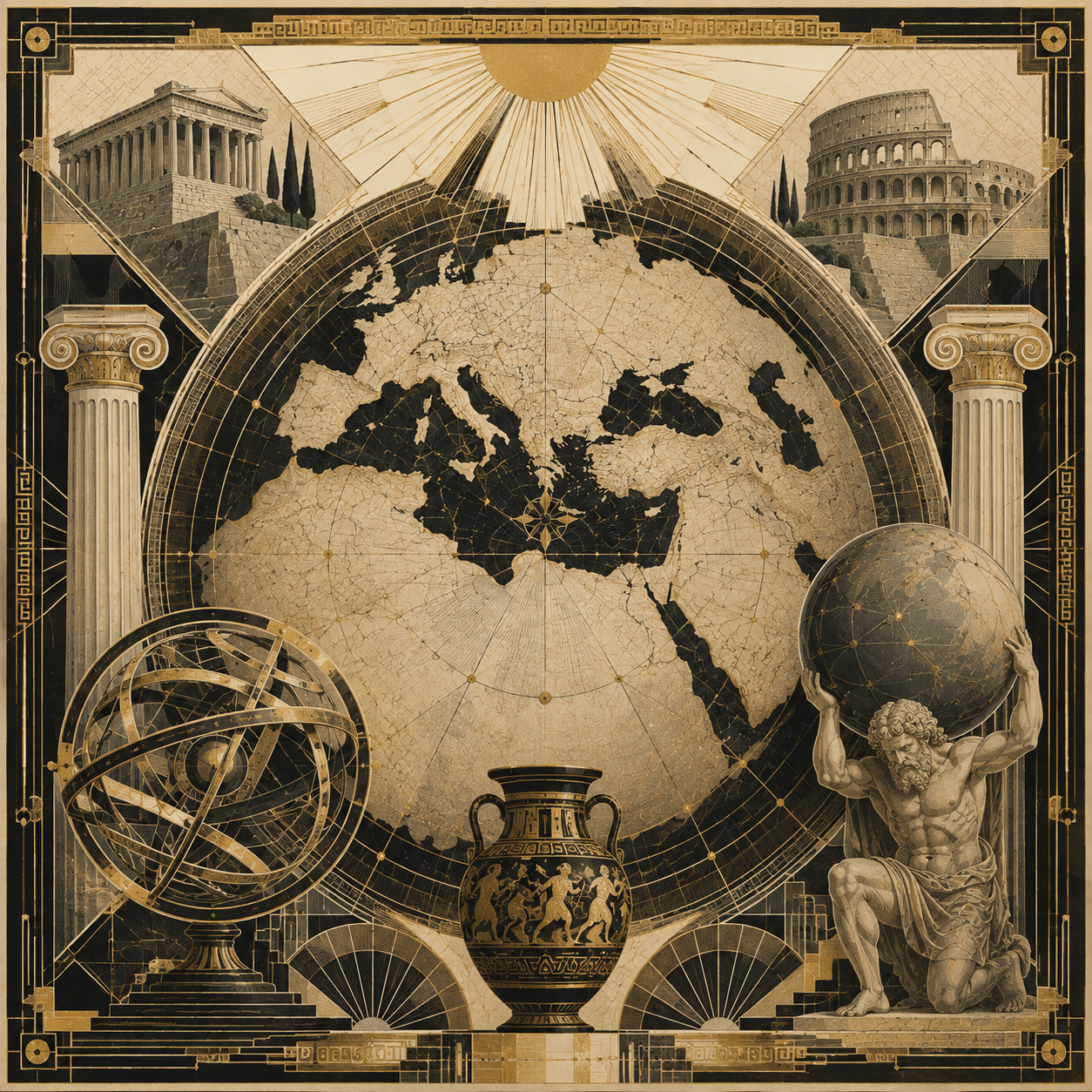
The most comprehensive classical asteroid casting offered through Penelope’s Page. This service examines 360 asteroids drawn from the wider Greco-Roman mythological, literary, philosophical, geographic, religious, and archetypal tradition.
The Greco-Roman Atlas includes gods and goddesses, heroes, heroines, monsters, personifications, sacred places, literary figures, philosophers, virtues, psychological concepts, and major figures from overlapping classical traditions.
Because of its breadth, the purpose of this casting is not to assign equal importance to all 360 bodies. Instead, it identifies repetition, clustering, mythic relationships, degree patterns, and recurring archetypal structures within the chart.
The result is a large-scale classical map of the natal field: a way of seeing which stories, figures, concepts, and relational patterns repeatedly emerge and how they weave together.
Asteroid Count: 360
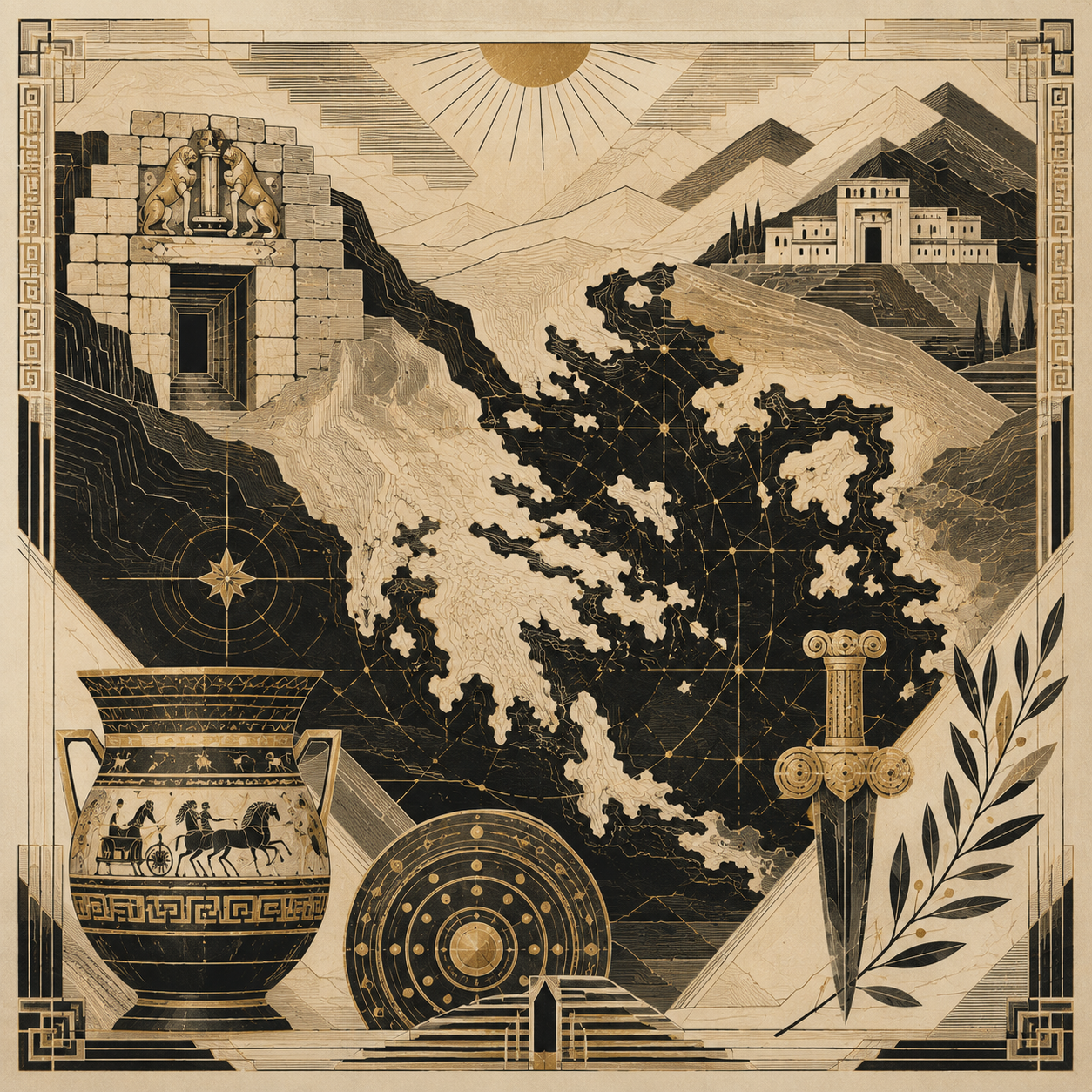
A broader mythographic casting built around the heroic and dynastic world associated with the Mycenaean and Homeric traditions. This service examines 180 asteroids representing major gods, royal houses, heroes, family lines, sacred places, conflicts, journeys, and interconnected mythic cycles of the Greek Heroic Age.
The Mycenaean Map expands beyond a single text or hero to map the relationships between stories.
Rather than asking only what an individual asteroid means, this casting asks where entire mythic networks appear within the chart: family systems, inherited roles, rivalries, alliances, repeated archetypes, geographic symbolism, and recurring narrative structures.
This is an atlas-style reading intended to reveal how multiple myths intersect within a single natal pattern.
Asteroid Count: 180
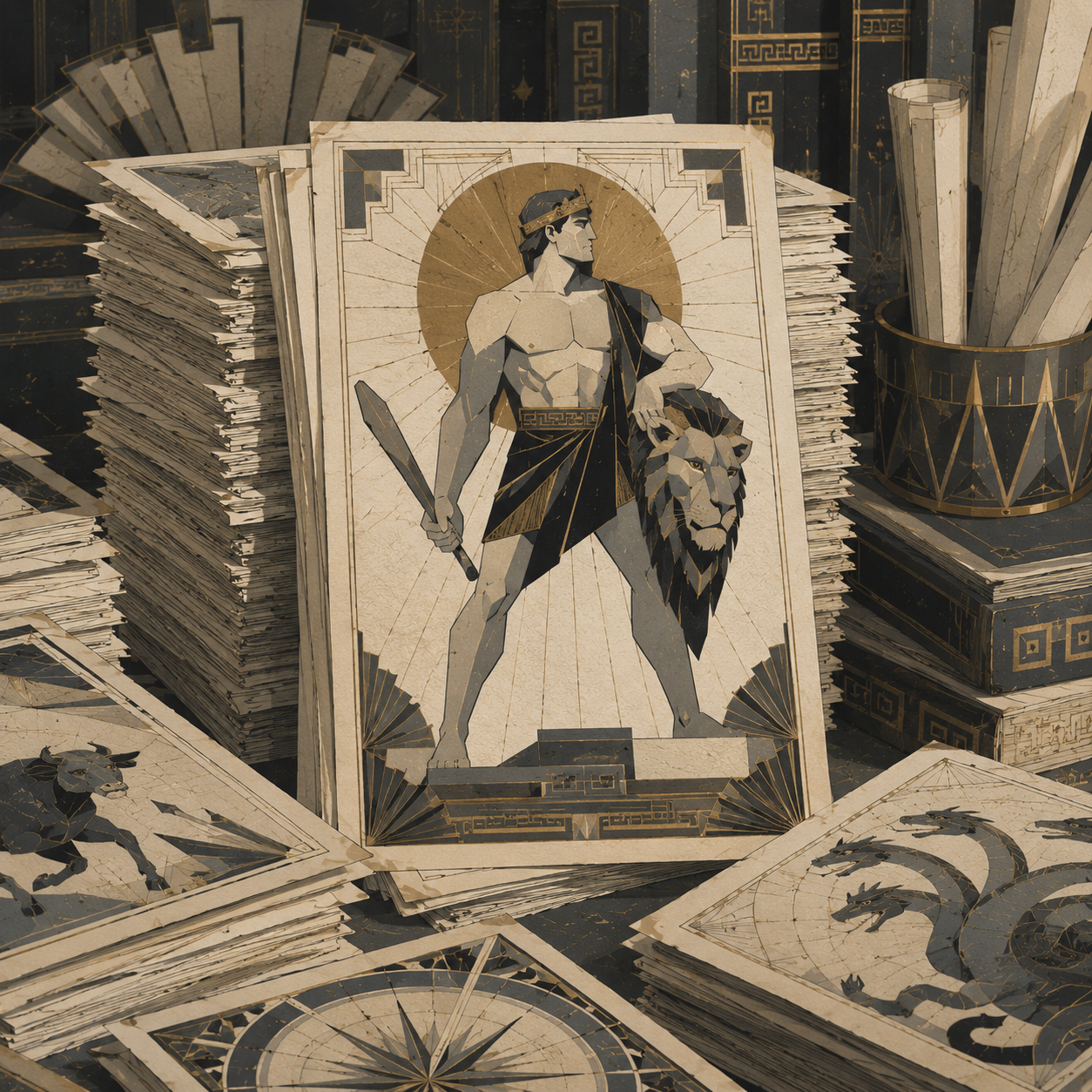

A focused asteroid casting built around the Heraclean mythic cycle. This service examines 89 asteroids connected to Heracles, his lineage, labors, allies, adversaries, monsters, divine influences, and related heroic figures.
The casting is designed to identify where Heraclean themes appear within the natal chart: endurance, trial, inherited burden, strength, service, conflict, purification, consequence, and the transformation of struggle into capability.
Each selected asteroid is drafted into the chart and considered through its placement, mythological context, etymology, archetypal meaning, and relationship to other activated figures within the Heraclean network.
Asteroid Count: 89
Homeric Catalog:
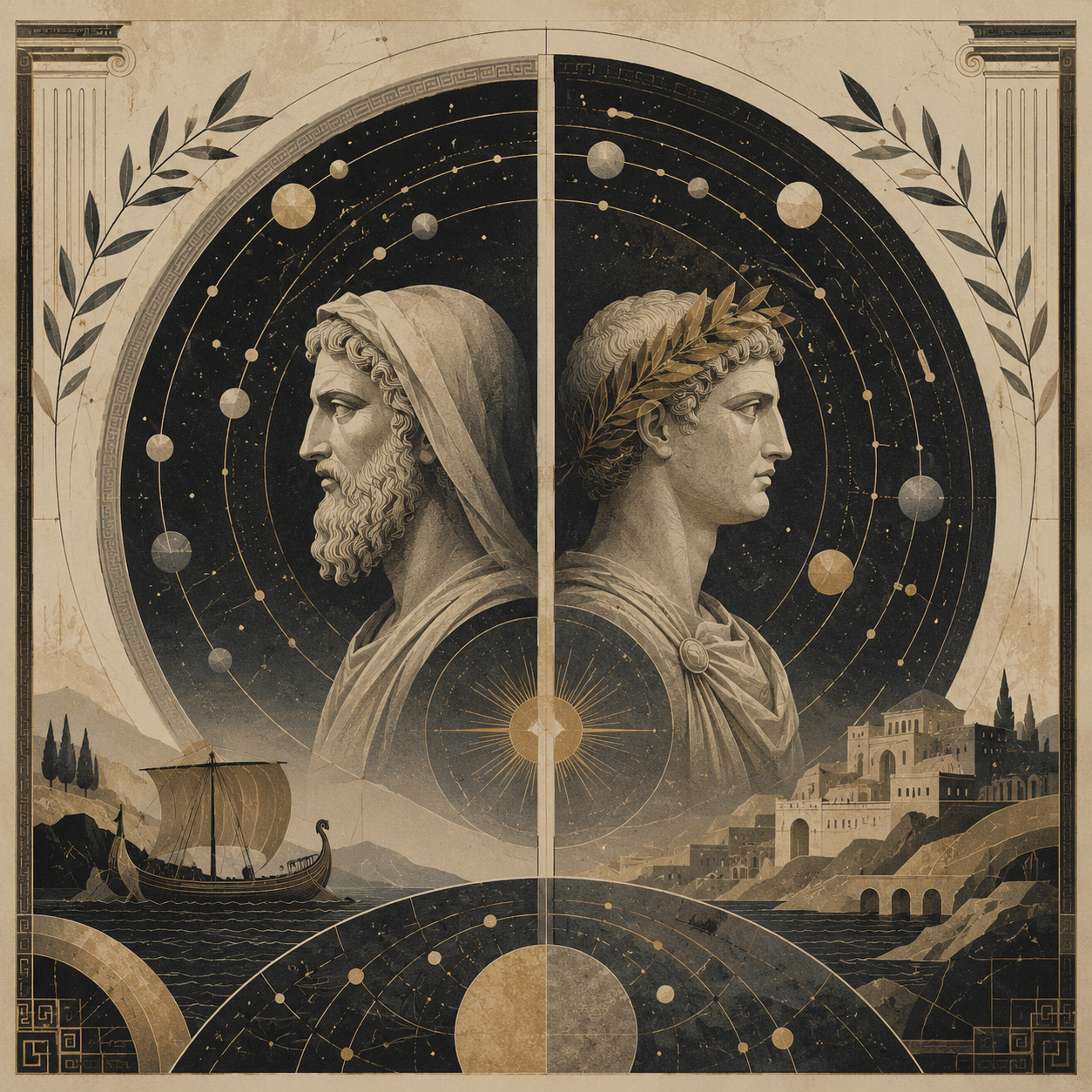
A literary and mythographic asteroid casting centered on the Homeric world of the Iliad and Odyssey. This service examines 165 asteroids associated with the Trojan War, Greek and Trojan figures, the House of Atreus, Odyssean journeys, divine intervention, loyalty, grief, honor, homecoming, and heroic identity.
Rather than reading each asteroid in isolation, the Homeric Casting looks for repeating characters, relationships, houses, degrees, and mythic patterns within the natal chart.
It is particularly suited to exploring themes of conflict, fate, family, devotion, exile, reputation, survival, return, and the consequences of choice.
Asteroid Count: 165
Virgilian Catalog:
A specialized asteroid casting centered on the mythological and literary world of Virgil, particularly the Aeneid. This service examines 80 asteroids associated with Aeneas, the surviving Trojan line, divine obligation, migration, ancestry, sacrifice, destiny, and the formation of a future through the remains of the past.
The Virgilian Casting is especially concerned with inheritance and continuation: what is carried forward, what must be abandoned, and what responsibility survives catastrophe.
Asteroids are interpreted through their natal placement, etymology, literary role, archetypal meaning, and relationships to other activated figures within the Virgilian field.
Asteroid Count: 80
Curated Threads are focused asteroid castings built around a single archetypal, mythological, relational, or symbolic theme.
Each Thread contains approximately 40–50 carefully selected asteroids drawn from the larger Penelope’s Page indexing system. Rather than surveying an entire mythic tradition, Curated Threads narrow the field to one subject—such as fate, love, sovereignty, healing, war, the underworld, lineage, creativity, or heroic identity.
The selected asteroids are drafted into the natal chart and read individually and relationally through their placement, etymology, mythological or historical context, archetypal meaning, degree patterns, and connections to other activated bodies within the Thread.
Curated Threads are designed to reveal concentrated patterns within a specific area of experience. Repetition, clustering, relational mythology, and recurring degree structures help identify which parts of the chosen archetypal field are most active within the chart.
Because many asteroids participate in more than one myth, story, or symbolic category, overlap between Curated Threads is intentional. Each Curated Thread is an all-inclusive $360 authored casting; there is no separate drafting fee. Every newly purchased unique asteroid earns $3.94 in credit toward The Celestial Sphere, up to $180 per Curated Thread. An asteroid may appear in multiple authored Threads when it remains symbolically relevant, but it earns corpus credit only once.
Asteroid Count: Approximately 40–50 per Curated Thread

The Catalog Companion Chapters are concise study guides and interactive workbooks created to accompany the larger mythic catalog publications. Each chapter distills key ideas into a more approachable format while adding prompts, note-taking space, and guided exercises that help you work directly with the material. They are designed to make the catalog content easier to study, revisit, and apply without reproducing the full reference volume.
These companion chapters can be used independently or alongside the corresponding catalog for a more layered learning experience. Their purpose is to turn structured reference material into an active study process through reflection, comparison, and personal notes. The result is a compact hybrid of mini guide and workbook that supports both learning and ongoing research.
The Curated Thread Companion Chapters are focused mini guides and interactive workbooks designed to help you explore the larger themes within the Curated Thread collection. Each chapter combines concise explanatory material with guided prompts, note-taking space, and reflective exercises so you can move from reading into active interpretation. They are designed to support deeper engagement without requiring the full reference edition.
These companion chapters work well as stand-alone study tools or as a bridge into the Complete Curated Thread publications. Their purpose is to help you identify patterns, organize observations, and develop your own responses to the material in a structured way. The result is a practical, approachable format that blends reference, reflection, and workbook-style exploration.
The Odyssey Map Reader's Companion is an interactive guide to the places, journeys, encounters, and narrative thresholds that shape the Odyssey. It organizes geographic and mythic locations into a readable framework that helps readers follow movement through the epic without losing the symbolic meaning of each stop. Historical context, place-based notes, and interpretive prompts connect the map to the larger themes of exile, identity, temptation, memory, and homecoming.
Interactive spaces allow you to annotate routes, compare episodes, and record your own observations as you work through the text or related celestial material. The companion is especially useful for readers who think spatially and want to understand the Odyssey as both a story and an organized journey structure. It turns the map from a decorative reference into a practical tool for literary, mythological, and symbolic study.
A Chronology of Greek Myth organizes the vast interconnected traditions of Greek mythology into a navigable sequence of generations, events, conflicts, and heroic cycles. From primordial creation and the rise of the gods to dynastic struggles, legendary heroes, and the great epic traditions, the publication helps readers understand how individual myths relate to the larger mythological world. It is designed to provide historical and narrative orientation within a tradition that is rarely preserved as a single continuous timeline.
The chronology highlights relationships between divine generations, mortal lineages, major events, and overlapping mythic traditions while acknowledging that ancient sources do not always agree on sequence or detail. Readers can use it as a companion to mythology, literature, archetypal research, asteroid study, or the broader Penelope’s Page catalog system. The result is a practical map of Greek myth that makes an extraordinarily complex body of stories easier to follow, compare, and revisit.
The Mythic Loom is a genealogical atlas designed to make the complicated family structures of Greek and Roman mythology easier to see, follow, and research. It maps divine, heroic, dynastic, and relational lines so that births, marriages, conflicts, inheritances, and repeated family patterns can be understood within a larger network. The atlas emphasizes relationship architecture rather than treating each mythic figure as an isolated character.
Interactive navigation and cross-referencing help you move between names, branches, and related stories without losing your place in the genealogy. The publication is useful for mythology readers, astrologers, writers, and researchers who need a visual reference for lineage and relational context. It is designed as a long-term working atlas for tracing how mythic families and their stories remain woven together.
No results match your search. Try removing a few filters.

